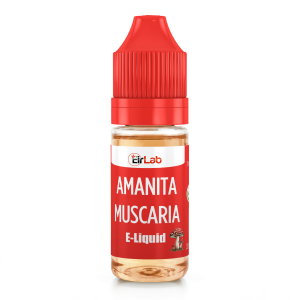

AMANITA MUSCARIA
EIRLAB Amanita Muscaria dried powder are produced in Ireland using only organic ingredients. 100% Natural.
Chemistry, Culture & Consciousness
Amanita muscaria, commonly known as Fly Agaric, is an iconic mushroom recognised by its bright red cap and white spots. Beyond its distinctive appearance, it has a fascinating place in natural history, neurochemistry, folklore and the study of traditional relationships between humans and fungi.
Active Compounds & Neurochemistry
The primary psychoactive compounds in Amanita muscaria are muscimol and ibotenic acid, two naturally occurring molecules that interact with different signalling systems in the brain.
Muscimol: A Potent agonist of GABA-A receptors, which mediate much of the brain’s inhibitory neurotransmission. Its activity can produce sedation, altered awareness, dreamlike experiences and changes in perception and coordination.
Ibotenic acid: An excitatory amino acid that acts on glutamate receptors, including NMDA receptors. It contributes to the mushroom’s neuroactive effects and can be neurotoxic under certain conditions.
Muscazone: A related compound that may form through the transformation of ibotenic acid. Its pharmacological significance is less well understood.
Psychoactive Effects
Amanita muscaria differs chemically from psilocybin-containing mushrooms. Its effects are primarily associated with GABA and glutamate signalling rather than the classic psychedelic mechanism involving serotonin 5-HT2A receptors. Reported effects include altered sensory perception, dreamlike or delirium-like states, changes in time perception, drowsiness and impaired coordination. Nausea, agitation, confusion, seizures and other serious toxic effects can also occur. Experiences are highly variable and should not be assumed to be safe, predictable or therapeutic.
From a recreational perspective, the important distinction is that A. muscaria is not simply a psychedelic mushroom. It can produce sedation, dreamlike or delirium-like experiences, altered perception, impaired coordination, and sometimes intense confusion. The experience can vary substantially between mushrooms and preparations, making it difficult to predict.
What is the recreational experience like?
Altered perception: visual distortions, unusual sensory experiences and dreamlike imagery.
Changes in consciousness: confusion, disorientation, altered awareness of time and alternating periods of agitation and sleepiness.
Physical effects: dizziness, poor balance, muscle twitching, nausea and vomiting.
Psychological effects: experiences may feel unusual or euphoric to some people, but anxiety, delirium and frightening hallucinations are also possible.
Unlike classic psychedelic substances such as psilocybin, A. muscaria is more accurately associated with a mixed intoxicating, delirious and sedative state.
Other constituents: The mushroom also contains various amino acids, pigments and other metabolites that contribute to its biological and chemical profile.
The relative concentrations of these compounds vary with the mushroom’s development, environment, storage and processing. Ibotenic acid can convert to muscimol through decarboxylation, changing the chemical composition and potential effects of the material. This variability makes its psychoactive effects difficult to predict.
Cultural History & Ethnomycology
Amanita muscaria has a long history of cultural and ethnographic interest, particularly among some Indigenous peoples of Siberia and northern Eurasia. Historical ethnographic accounts describe its use in certain ceremonial and shamanic contexts, where altered states of consciousness were interpreted through local spiritual and cosmological traditions. Ethnomycology, the study of how human cultures understand and use fungi, examines the mushroom’s place in ritual, traditional knowledge, folklore and symbolic expression. Fly Agaric has also become a familiar figure in European fairy tales, seasonal imagery and popular representations of enchanted forests. However, its symbolism varies across cultures, and popular claims linking it to specific ancient religions or universal spiritual practices are not always supported by reliable historical evidence.
Health Research & Modern Interest
Modern scientific interest centres on the pharmacology of muscimol and ibotenic acid, their effects on neural signalling and their potential value as research tools for understanding the nervous system. Muscimol is used in experimental neuroscience to investigate GABA-A receptor function and neural circuits. Although these compounds are scientifically interesting, robust clinical evidence does not establish Amanita muscaria as an effective treatment for anxiety, insomnia, pain or other health conditions. Traditional use and anecdotal reports can inform research questions, but they do not demonstrate clinical efficacy or safety.
A Scientific & Spiritual Perspective
Scientifically, Amanita muscaria illustrates the complexity of fungal chemistry and the powerful ways naturally occurring molecules can influence the brain. Culturally and spiritually, it represents a longstanding human fascination with fungi, altered consciousness, ritual and the natural world. Approaching Fly Agaric through both perspectives means respecting its cultural significance while distinguishing historical accounts and personal interpretations from established scientific evidence. Its fascinating chemistry and heritage deserve careful study.
AMANITA MUSCARIA DOCUMENTATION:
Product Specification – PDF
MSDS – PDF
Lab Report CoA – PDF
Amanita Muscaria Overview by EIRLAB – PDF
Amanita Muscaria Guide – PDF
Since 2017 EIRLAB have been providing Lab testing, Analytical, Production, and Certification services to the Hemp, Pharmaceutical and food industries. EIRLAB products are produced by PhD scientists in Ireland in a ISO-certified facility using only bio-based ingredients which include natural Cannabis extracts.